MEPCO (Multan Electric Power Company) covers a large part of southern Punjab, including Multan, Bahawalpur, Rahim Yar Khan, Dera Ghazi Khan, Muzaffargarh, Vehari, Khanewal, Sahiwal, Lodhran, Layyah, Rajanpur, Bahawalnagar and Pakpattan. This region has some of the hottest summers in Pakistan, so cooling load drives most MEPCO bills. Agricultural tube-wells are also very common in MEPCO territory, which is why the company handles many different tariff categories.
This guide walks through a MEPCO bill line by line so you can understand how the final amount is reached. Rates change through NEPRA determinations and government notifications, so use this as a reading guide and confirm current rates officially.
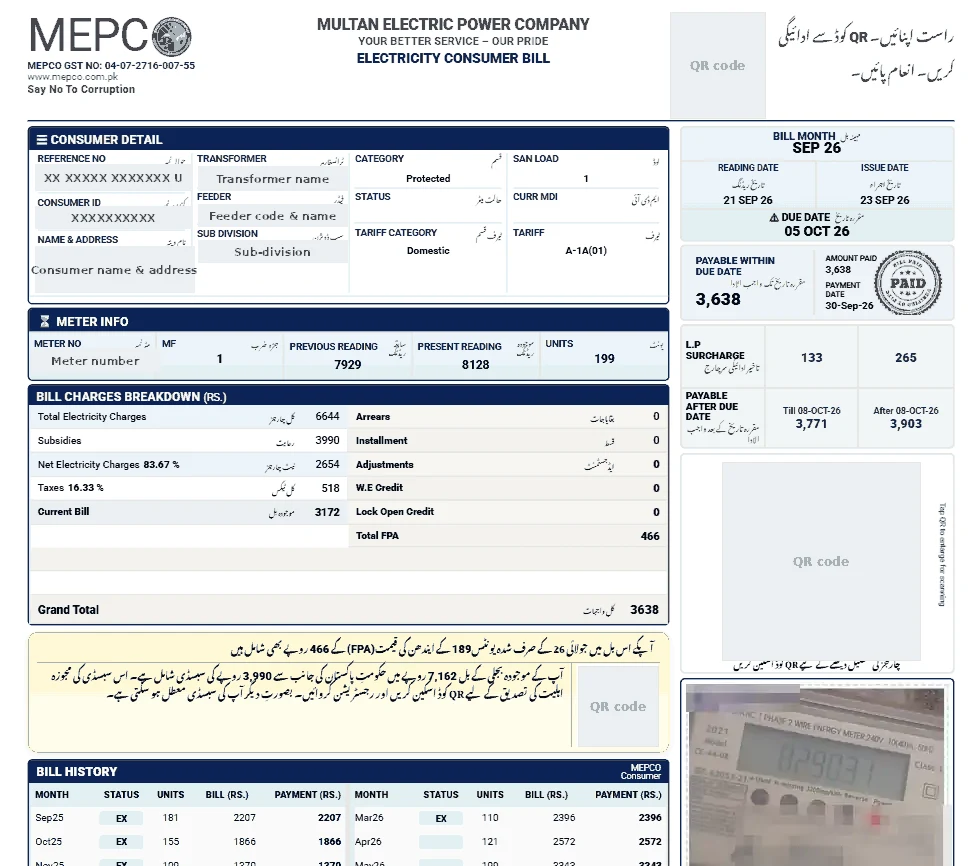
Example: a real MEPCO bill explained
In the sample bill above, a protected domestic consumer used 199 units (present reading 8128 − previous reading 7929). The total electricity charges were Rs 6,644, of which the government subsidy covered Rs 3,990. After adding Rs 518 in taxes and Rs 466 FPA (for 189 units of an earlier month), the payable amount was Rs 3,638. Paying late would have added Rs 133, rising to Rs 265 after the second date.
The top section: your account details
At the top of the bill you will find your reference number (14 digits), consumer ID, name and address, tariff code, sanctioned load, connection date and meter number. Check these carefully:
- Tariff: A-1 for residential, A-2 for commercial, D for agriculture, B for industry.
- Sanctioned load: if your actual load is much higher, you may be asked to extend it.
- Meter number: must match the meter installed at your premises.
Readings and units
The bill shows previous and present readings and units consumed. MEPCO bills also include a 12-month consumption history. This history is very useful: it shows whether this month is unusual and whether you stayed under 200 units for six months (protected status).
If units look abnormally high, compare with the meter. Errors can occur because of wrong reading, a defective meter or estimated billing. Report quickly so a correction can be made before the due date.

Cost of electricity and slabs
Residential consumers are charged by slabs. Protected consumers (up to 200 units in each of the last six months) receive lower rates in the first two slabs. Non-protected consumers are charged higher rates, and the rate rises with consumption. In southern Punjab summers, a single heatwave month can move a household from a protected to a non-protected category for the next six months, so planning AC use matters.
Fuel and quarterly adjustments
FPA reflects the difference between the reference fuel cost and the actual fuel cost of an earlier month. NEPRA hears the request and announces the per-unit adjustment; DISCOs then apply it to bills, usually based on units of the reference month. QTA is applied for a quarter at a time. Both can be positive or negative.
Taxes on a MEPCO bill
- GST is charged on the electricity value as per federal law.
- Income tax applies on commercial and industrial bills above certain thresholds and can be adjusted against annual tax liability.
- Extra tax and further tax can apply to commercial consumers not on the Active Taxpayer List.
- Electricity duty and PTV fee were removed from bill collection in 2025 by federal decisions.
Agricultural tube-well bills
Agricultural consumers have a separate tariff (D category) and may receive government subsidy packages from time to time. Agricultural bills can also include fixed charges based on load. If you run a solar tube-well with a grid backup, keep a careful record of grid units.
Due date, LPS and installments
Pay within the due date to avoid a late payment surcharge. MEPCO may allow installments for large bills or arrears on request at the sub-division office. Deferred amounts approved by the government may appear as separate lines.
Practical checklist for MEPCO consumers
- Compare units with the same month last year in the consumption history.
- Confirm your tariff code and sanctioned load.
- Check whether FPA is positive or negative this month.
- Look for duplicated arrears after you have paid; keep your paid bill receipts.
- For disputes, apply in writing at the sub-division and keep the diary number.
Download a duplicate MEPCO bill
Enter your 14-digit reference number on the official PITC MEPCO bill page. Our bill checker sends you directly to the right official page. For outages and complaints, call 118 from your mobile.