If something on your electricity bill looks wrong, you can verify it yourself before visiting the DISCO office. A structured check takes about 15 minutes.
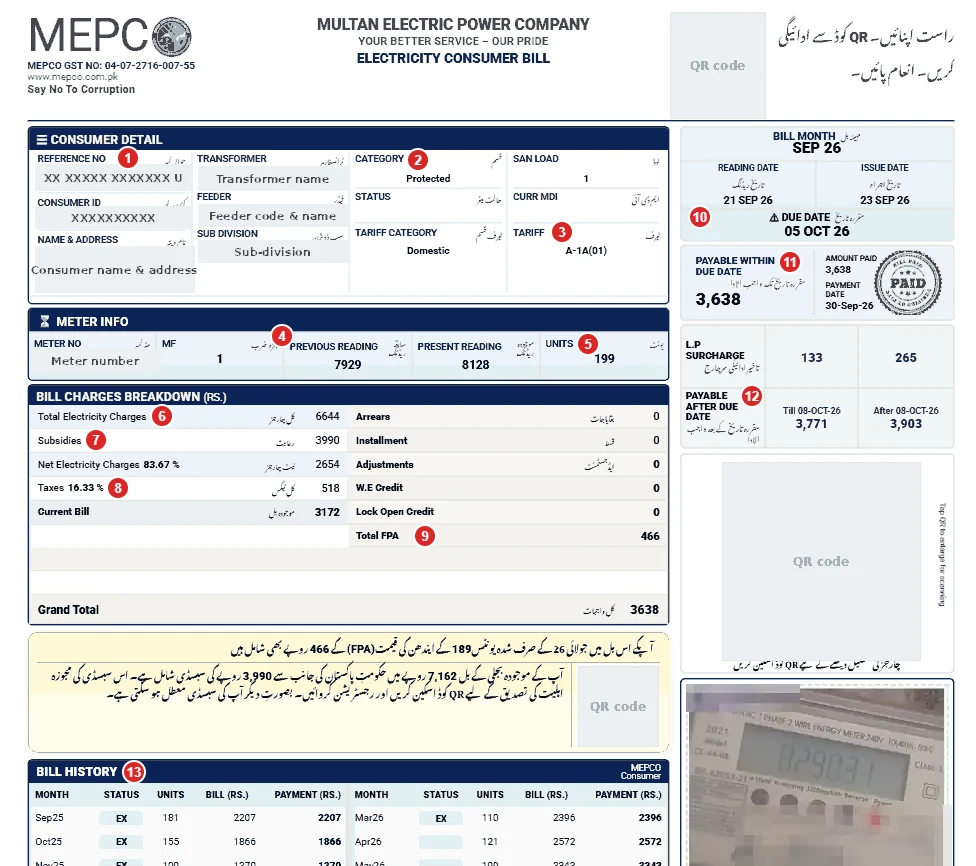
What you need
- Your current bill and the last few bills
- A dated photo of your meter reading
- The latest tariff and FPA/QTA announcements (from NEPRA or news)
Step 1: Verify the reading
Compare the present reading on the bill with your meter photo. If the bill's reading is higher than the meter, you have been over-billed. If it says "average" or "estimated", the reading was not taken.
Step 2: Verify the units
Present reading − previous reading = units. Apply the multiplying factor if your bill shows one.
Step 3: Verify the category and slab
- Tariff code (A-1, A-2, etc.) correct for your use?
- Protected or unprotected? Check the six-month history.
- TOU meter? Check peak/off-peak readings separately.
Step 4: Verify the cost of electricity
Apply the current official rate(s) for your slab or TOU periods.
Step 5: Verify adjustments
- FPA rate × reference-month units
- QTA rate × current units (if applicable)
Step 6: Verify taxes
Check GST on the taxable value, and income/extra/further tax if you are a commercial consumer.
Step 7: Verify arrears
Compare with your payment receipts. Make sure last month's payment is credited.
If you find an error
- Visit your DISCO sub-division before the due date with the bill, meter photo, receipts and CNIC.
- Submit a written complaint and keep the receipt or diary number.
- Ask for a corrected bill.
- Call 118 to register the complaint as well.
- If not resolved, you can approach NEPRA's consumer complaint system.
Faulty meter
If you believe the meter itself is inaccurate, you can request a meter test. Ask the sub-division about the procedure and any fee.
Keep records
Photograph your meter each month and keep paid bills for at least a year. Good records make any dispute much easier to resolve.