Your electricity bill starts with one number: the units you consumed. One unit equals one kilowatt-hour (kWh) — the energy used by a 1,000-watt appliance running for one hour. Understanding how units are measured and calculated helps you check your bill and control consumption.

How units are calculated on the bill
The bill shows two readings:
- Previous reading: the meter reading at the start of the billing period.
- Present reading: the meter reading at the end of the period.
Units consumed = present reading − previous reading.
Example: previous reading 12,450 and present reading 12,760 → 310 units.
If your connection has a multiplying factor (common on larger commercial and industrial meters with current transformers), the difference is multiplied by that factor. The factor is printed on the bill.
Reading your own meter
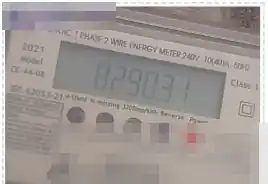
- Digital single-phase meters cycle through several screens. Wait for the screen showing total kWh (often labelled "kWh" or with a code); note that number.
- Time-of-use meters show separate registers for peak and off-peak kWh.
- Bidirectional (solar) meters show import and export registers.
Taking a photo of the meter on the same date each month lets you compare with the bill.
Estimating units for appliances
Units = (watts × hours used ÷ 1,000) × days.
- A 100-watt ceiling fan running 12 hours a day for 30 days: 100 × 12 ÷ 1000 × 30 = 36 units.
- A 1.5-ton inverter AC averaging about 1,000 watts for 8 hours a day: 1,000 × 8 ÷ 1000 × 30 = 240 units.
- A 1,000-watt iron used 30 minutes a day: 1,000 × 0.5 ÷ 1000 × 30 = 15 units.
These are rough estimates; actual use depends on settings, weather and appliance efficiency.
Why the reading period matters
Billing periods are about 30 days, but can be longer if reading is delayed. A 35-day period means about 17% more units than a 30-day period with the same daily use — and this can push you into a higher slab or out of protected status. If the period is unusually long, you can raise it with your sub-division.
When units look wrong
- Compare the bill's present reading with your meter photo.
- Check for words like "average" or "estimated" — these mean the reading wasn't taken.
- A fast-running or faulty meter can be tested on request at the DISCO.
Once you know your units, read our guide on calculating the bill from units to see how they turn into rupees.