Every electricity bill has a due date. Paying on or before it avoids the late payment surcharge and keeps your connection in good standing. Here is how due dates work and the easiest ways to pay.
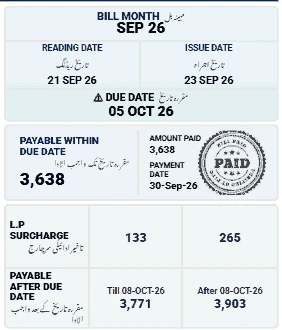
Where is the due date?
It is printed on the bill near the amounts, usually with the issue date and reading date. You can also see it on the online duplicate bill.
How due dates are set
DISCOs divide consumers into batches. Each batch has its own reading schedule and due date, which is why neighbours can have different due dates. Typically the due date is about a week or more after the bill is issued.
Payment methods
- Banking apps and internet banking: most Pakistani banks support electricity bill payment under Utility Bills.
- Mobile wallets: JazzCash, Easypaisa and others.
- Bank branches: pay over the counter before the due date.
- Post offices and some retail agents.
Enter the 14-digit reference number without spaces. Most apps show the bill amount and due date before you confirm.
Tips for on-time payment
- Save your reference number as a biller in your app.
- Turn on bill reminders if your bank offers them.
- Check the bill online if the paper bill hasn't arrived — the due date still applies.
- Pay a day or two before the due date in case of bank holidays or system delays.
Due date extensions
DISCOs sometimes extend due dates for whole areas — for example after floods or when bills were issued late. Individual extensions may be granted on request at the sub-division in genuine cases.
Paying a disputed bill
If you think the bill is wrong, submit a written complaint before the due date. Ask whether a corrected bill will be issued, or whether you should pay part of the amount to avoid a surcharge.
After paying
Keep the receipt or transaction ID. Check that the payment is reflected on the next bill and not shown as arrears.