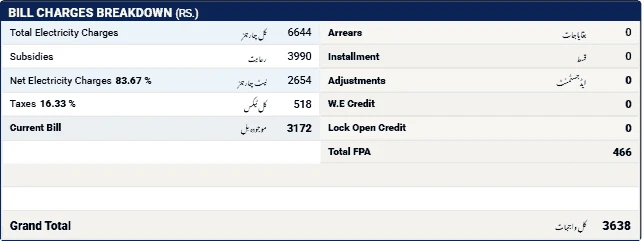
The arrears line on your electricity bill shows money the DISCO believes you still owe from earlier bills. Arrears can be correct — or they can be the result of a payment not being credited. Here is how to understand and deal with them.
What arrears include
- Unpaid amounts from previous bills.
- Late payment surcharges that were added when a bill was paid late.
- Partial payments where only part of the bill was paid.
- Detection amounts or corrections that were not paid.
- Installments that are due.
Why arrears appear even after you paid
- Payment timing: if you paid near or after the reading/billing date, the payment may not be reflected on the next bill and will show on the one after.
- Wrong reference number: a payment made to another number will not be credited to you.
- Bank or wallet delay: rarely, a payment may take time to post.
- Partial payment: paying less than the full amount leaves a balance.
How to check
- Collect your last few bills and payment receipts.
- Compare the paid amounts and dates with the bill history.
- Check the transaction ID or bank receipt shows the correct reference number.
How to get wrong arrears corrected
- Visit your sub-division with the bill, payment receipts and CNIC.
- Submit a written application requesting correction.
- Ask for the corrected bill or written confirmation before the due date.
- Call 118 to register a complaint if needed.
Paying large arrears
If arrears are genuine but large, you can apply for installments at the sub-division. Approved installments are added to monthly bills. Keep paying current bills on time to avoid disconnection.
Arrears when buying or renting property
Arrears stay with the connection, not the person. Before buying or renting:
- Ask for the latest paid bill.
- Check the bill online for outstanding amounts.
- Agree in writing who will pay any arrears.
Disconnection risk
Unpaid arrears can lead to a disconnection notice and, eventually, disconnection. Reconnection requires paying dues and possibly fees, so resolve arrears quickly.